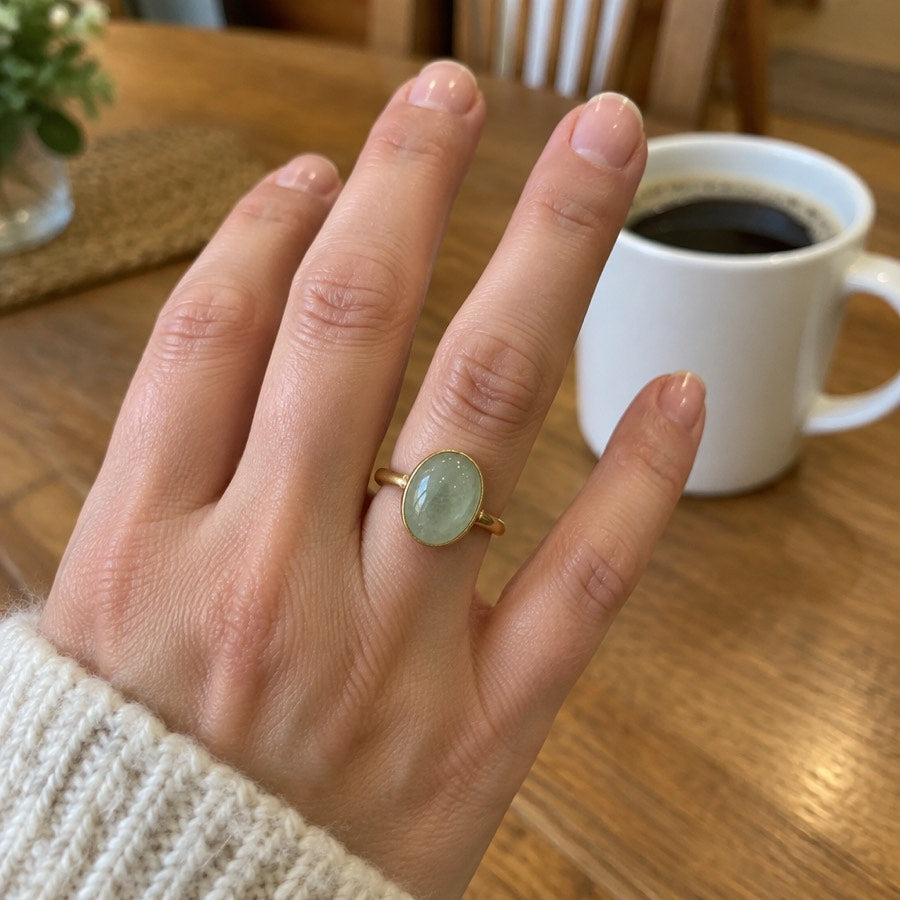
For most of her working life, Maggie has sat at the same wooden bench, with the same jars of clasps and beads on the shelf and the same window onto the street. Nothing she made was mass-produced. More than 10,000 Americans found her pieces the slow way: a compliment at a wedding, a friend asking where a necklace came from.

“I wanted clasps that close properly, chains with some weight in them, edges that don’t catch on a sweater,” Maggie said. “The kind of piece you reach for on a Tuesday and still wear to a wedding.”

Why is she closing now?
Not because people stopped buying. Maggie is moving to a smaller place, closer to her daughter, and the shop isn’t coming with her.
That leaves every finished piece still sitting in her glass cases. A buyer offered to take the whole lot off her hands for a fraction of what it’s worth and sell it on under someone else’s name. She refused.
“I’d rather every last piece end up on someone who’ll wear it,” she said, “than sit in a box in a warehouse.”

Every piece is free. You only cover the shipping.
So instead of a clearance sale, Maggie is giving the jewelry away. These are the same pieces that carried price tags of $144.95 to $164.95. Not seconds, not samples. The only cost is the shipping that gets a piece to your door, and the exact amount is shown at checkout before you pay.
If a piece isn’t right, you can send it back within 30 days of delivery and the shipping is refunded in full.

How readers are claiming theirs
It works like any online order:
- Pick the pieces you like on Maggie’s website. Every one is marked free.
- Add them to your cart.
- At checkout you pay only the shipping, shown before you pay. Your pieces arrive in 7 to 13 business days.
When it’s gone, it’s gone
There is no restock coming, because there is no new production. Every piece that ships is one that will never be listed again. When the cases are empty, the website closes with them.

Nobody who compliments your piece is going to ask what you paid. And if they do, the honest answer is the postage.